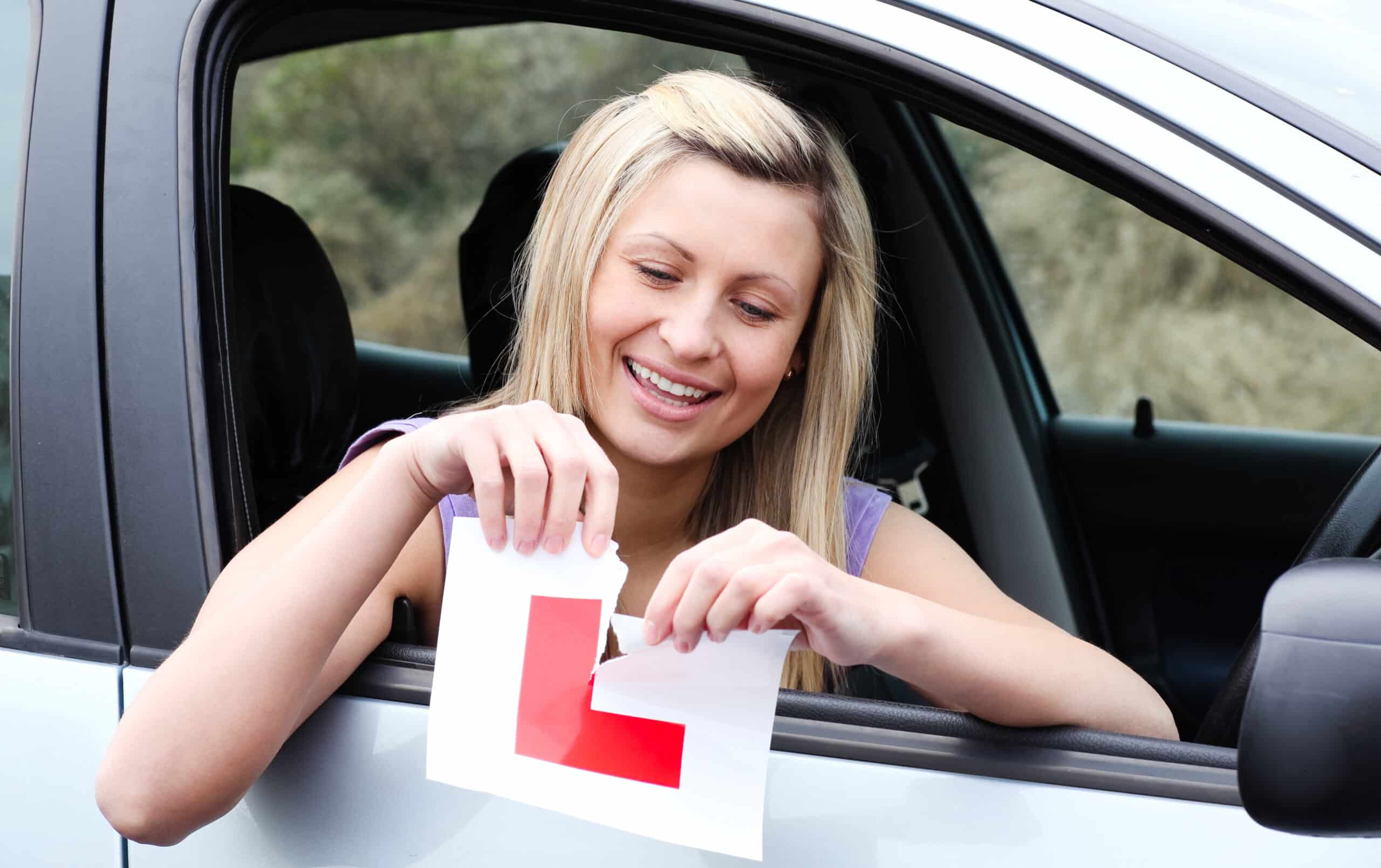
Ripping up those L plates after passing the first time might not be environmentally sound, or possible, if they’re made from plastic, but it’s a metaphorical sign of triumph! It feels like the pressure’s on all of us to pass on our first attempt, but there’s no shame in not doing so. You can still pass with flying colours after multiple attempts.
But there are a few steps we can all take to give passing first time our best shot.
Here are a few practical strategies you can apply to boost your chance of that first-time success.
Positive reinforcement
If you’re not getting positive reinforcement, you’ll have to try to muster some up yourself. Your instructor might not be the best person to give it to you. It could be a family member or a friend. The right mindset should be your starting point for all the preparation you’ll have to do.
Get comfortable behind the wheel
Examiners aren’t just looking for technical ability. They want to feel relaxed and confident in your hands at the wheel. Demonstrate your awareness of the road and other drivers, which should all add up to considered decision-making.
Practising in different road, good and more
severe weather conditions is key, if you have that luxury. We’re talking busy traffic, quiet residential streets and dual carriageways.
It’s all about repetition,
care, and attention, and there’s not really a shortcut to this.
Know the test routes
Many driving test centres use a selection of routes, and your instructor may of course be wise to this and have taken you on them. But this is by no means a given, and you might get an examiner who enjoys throwing you off your expectations.
Master manoeuvres
Reversing around corners, parallel parking, three-point turns. All a source of nerves, even for experienced drivers, so try not to worry if you mess them up in your practice. Master them before they do you.
Safety first always, and that means never rushing and trusting that other drivers will be patient and wait for you to perform the manoeuvres in your own time.
Theory is key
Even with your theory test under your belt, you must still apply it in real time. Road signs, speed limits and hazard awareness play a huge part in your practical test.
Perhaps you’ll make a habit of talking through your decisions in your practice, as it will help you reinforce your understanding and keep you mentally engaged.
Practice following the SatNav
Following SatNav directions or road signs is part of the test, and so your instructor should be getting you used to driving without their prompts.
Observational skills
Observational skills are one of the most important qualities to hone to pass your driving test first time. There’s no substitute for clear mirror checks and awareness of other road users – they help you anticipate potential risks and hazards.
The examiner might miss subtle glances in the mirror, so make sure you slightly move your head and look around you without overdoing it. Cards slowing down or birds suddenly taking off or cyclists slowing down – they’re all signs and signals.
Keep those nerves under control
Jangled nerves can mean the difference between a pass or fail. While they’re utterly normal, you can apply some techniques that keep them from shattering your confidence. You might want to try to view the test as just another lesson, and get a good night’s rest and sleep before the test. Breathing exercises can also be worth your time.
Panic shouldn’t follow mistakes. If anything, you can turn them around by a measured, confident recovery rather than going to pieces.
Take a lesson before your test
Perhaps this may or may not work for you, but if you feel you need a top-up, then it can get you into the right kind of winning mindset. You might get some last-minute tips that could prove invaluable.
What counts as a fault?
It pays to know what is deemed a fault so that you can avoid any such mistakes. These are often, of course, safety-first considerations, like never manoeuvring until it’s safe to do so.
Get familiar with your test car
It pays to know where all the controls are in the car, etc., and hopefully, you’ll be in a car that you’re familiar with. If not, then get to know it beforehand. Also, practice the ‘show me, tell me’ questions about the vehicle and its safety.