Book your Dumfries MOT & Service
Make:
Model:
Year:
Year:
Not You? Click to reset
Reg Number not found. Please double check your entry.

Call us on:
01387 440 450
Make:
Model:
Year:
Expiry:
Not You? Click to reset
Reg Number not found. Please double check your entry.
Scottish weather is like watching The Traitors. You never know what’s going to happen next. Blue skies can, in the blink of an eye of the storm, turn to cloudy ones, fog, snow, icy patches on roads, sudden downpours, and gale-force winds close our beautiful bridges.
Everybody knows that only Storm from the Marvel franchise can control the weather, while we mere mortals can barely get our brollies up in time. When driving, what we can do is control how we react to it.
Driving safely in severe weather is not about bravado – it’s about awareness, preparation and knowing when to take your foot off the gas. This Dumfries MOT Centre blog is about learning how various driving conditions affect your car and your reactions, and getting safely from A to B this winter.
A quick check of the weather forecast can work wonders, rather than chancing it to luck, or imagining you’re somehow immune to it all if it’s only a short hop. If severe weather is forecast, you really should ask yourself if the journey is essential.
Your vehicle must be weather-ready, starting with tyres. Worn treads are a huge no-no because this dramatically reduces grip on icy roads. Then there’s your lights, wipers, washer fluid, and of course, your brakes.
Book your car in for a winter service today if you have any concerns about any of the above.
Keep your windscreen clean inside and out to reduce glare.
Rain might be romantic in films, but don’t be seduced into thinking that driving in it is going to be without its tests. Wet roads are one of the most common causes of accidents on UK roads, because when it mixes with oil and dirt that’s already on the road surface, it creates a sinister slick that instantly reduces grip. Even more so following a dry spell.
Switch to dipped headlights to help others see you and space out your following distances because stopping distances are hugely reduced on wet roads. You must also avoid harsh braking or sudden movements and take corners with care.
Aquaplaning on standing water is a horrible feeling. If you sense that your steering is light or unresponsive, keep the wheel straight and ease off the throttle. Braking sharply is not the answer.
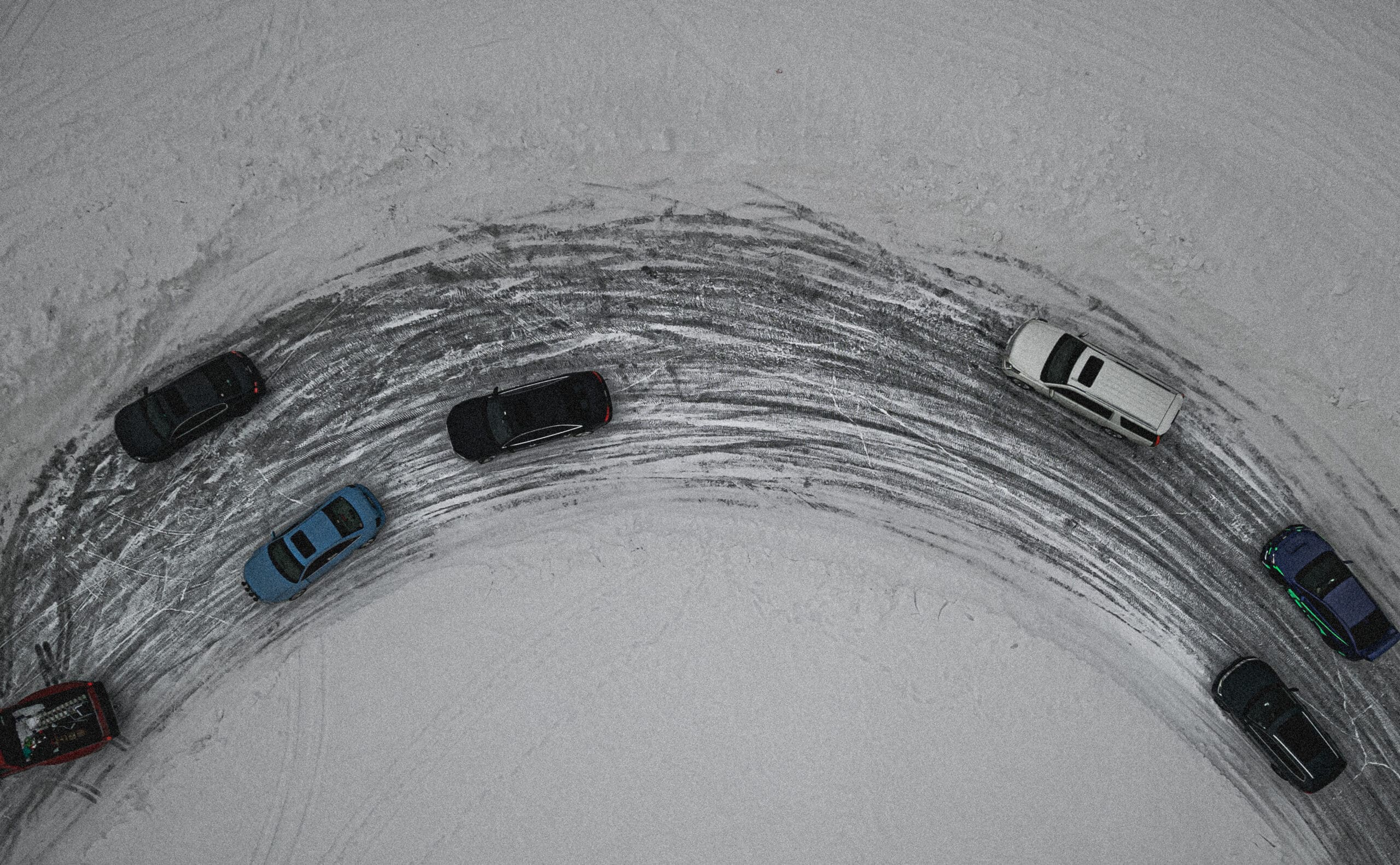
Patience is a virtue, and ice demands that you’re as pure as the driven snow. No matter whether you passed your test when deely-boppers were a thing, or recently, the key is to drive slowly, smoothly, while always trying to think ahead. Starting in a higher gear can reduce wheel spin, in conjunction with gentle acceleration with gradual braking, and slow steering helps you maintain control. Brake early and tenderly.
Black ice can be hugely dangerous because it hides in plain sight and has the power to send you into a spin. Look out for shaded areas, bridges, and untreated roads. If your car begins to slide, ease off the pedals and steer gently into the skid. Sudden corrections can cause loss of control, so please try and remain calm.
Turning back in tricky conditions is not a sign of weakness.
Fog and freezing fog can roll in super-fast and throw spanners in the works. Driving slowly and not using full beam (this only reflects off the fog) are key, and rear-intensity fog lights should only be used when visibility is drastically reduced. Used too liberally, they can cause glare and distraction for other drivers.
Keep a safe distance from the vehicle in front, using road or roadside markings to gauge spacing. Extra caution is required at junctions and roundabouts where other drivers may appear in a flash.
Using taillights as your guide can encourage you to speed up faster than the conditions allow.
Strong winds on exposed roads like bridges and motorways can be hazardous. High-sided vehicles, motorbikes and cars towing trailers and caravans are particularly vulnerable, but any vehicle is affected by gusts.
Grip the steering wheel firmly and prepare for the wind to push your car sideways, and, yes, it can feel so very alien and give you the collywobbles, especially when overtaking large vehicles or emerging from sheltered areas. Reduce speed, especially when overtaking cyclists. High winds are no picnic for them either.
Be on the lookout for fallen debris on the road, and be ready to react calmly.
Overconfidence can be your downfall, and not the severe weather conditions themselves. Newer cars tend to have more in-built safety features, but you can’t triumph over the law of physics. No technology can correct poor judgment or speediness.
More time for your journey is key, rather than rushing at the last moment and getting yourself all stressed out. You don’t have to keep up with traffic if it doesn’t feel safe to do so. This also buys you more time to anticipate the mistakes of others and up your reaction time in general.
Snowy roads, flooding, fallen trees and red weather warnings vs. your cosy lounge in front of the log burner. Hobson’s choice, really. When you’re on the road, and it’s busy in such conditions, perhaps you’ve wondered where all these people are going, and if the journeys were necessary.
We’re betting that most of them aren’t, and, at the risk of sounding preachy, the emergency services have enough on their plate.
You might end up stranded, and it’s recommended that you remain with your vehicle rather than walk for help. Especially in stormy weather. Keep a basic emergency kit in your car and warm clothing.
And don’t forget a torch and a fully-charged phone.
Sources:
AA
RAC
BBC