Book your Dumfries MOT & Service
Make:
Model:
Year:
Year:
Not You? Click to reset
Reg Number not found. Please double check your entry.

Call us on:
01387 440 450
Make:
Model:
Year:
Expiry:
Not You? Click to reset
Reg Number not found. Please double check your entry.
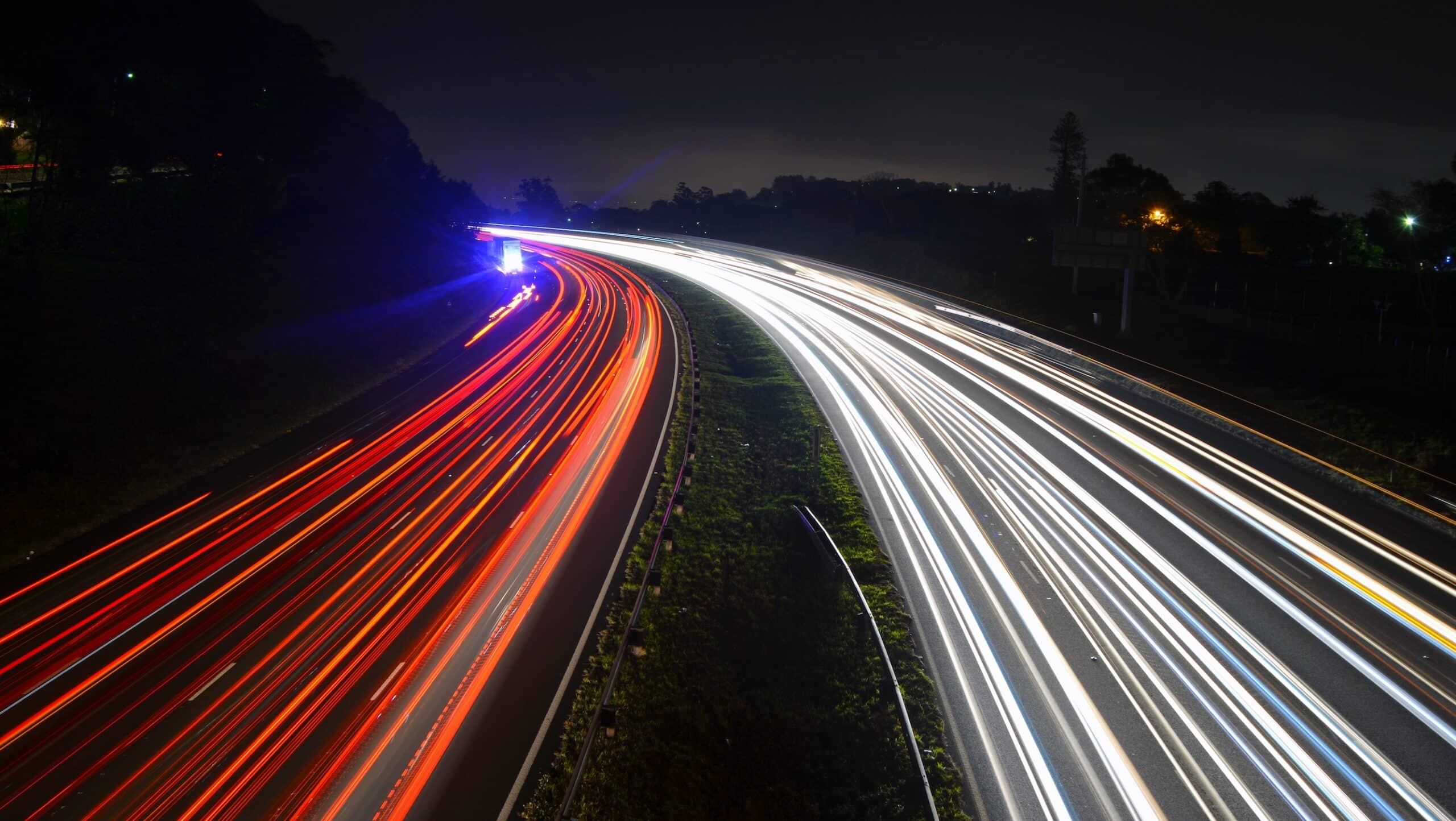
Lady Gaga seems perfectly okay with dancing in the dark, but what about driving in it?
She’s as well to read this blog about driving safely at night, as you are.
The clocks are firmly back, and don’t we know it. But unless you want to wipe out a good portion of the day for car travel, you’re going to have to do at least some nighttime driving in these dark times.
The Department for Transport says that around 40% of all fatal road collisions happen in the dark despite far fewer vehicles on the road, and it’s not just the lack of light that’s the cause.
It’s what often goes with it: tiredness, glare, and reduced visibility, and it’s all this that can make a nighttime drive a bit of a nightmare and something we’d much rather avoid.
But there are some things you can put in place to mitigate at least some of it.
Sounds obvious, that you must be seen, but how many cars do you see driving about with the driver seemingly oblivious to the fact that one or more of their lights are out?
Or perhaps they keep meaning to get it fixed. Apart from being illegal and risking being slapped with a hefty fine if you’re pulled over, it’s dangerous. That’s why you need to get in touch with us quickly, and we will fix it for you. Job done.
It’s always a good idea to check your lights regularly during autumn and winter.
If you can’t seem to shake a fogginess despite a lot of elbow grease and buffing like mad, it might be that your headlamp lenses are oxidised.
Bring them in, and we can restore them for you.
The more mature among you might remember ‘don’t dazzle, dip your headlights’ from an old TV ad, and it’s received wisdom as far as we’re concerned.
Many cars have an auto function that does it nowadays, but for those that don’t, main beams can cause accidents, so you must turn them down as soon as you see oncoming traffic.
Then there’s misaligned headlights. These are a common cause of dazzle to oncoming traffic, and getting flashed at could be a sign that yours need adjusting, and we can rectify that for you in a jiffy.
If ever you’re dazzled, rather than looking into the headlights, glance toward the left-hand kerb or white edge line of the road until your vision clears. Slow down, and take a break if necessary.
Flicking your rear-view mirror to night mode likewise reduces glare from cars behind you.
A smudged windscreen can be really dangerous at night, especially on winding country roads at night with nowhere to pull over so that you wipe it clean.
Especially given the fact that you might have to clean the inside and the outside to keep it streak-free and dust-free. Interior haze from heating and ventilation systems often goes undetected until you start the engine and are off on your nighttime journey.
Please also make sure you have anti-freeze in your screen wash reservoir, and if your wiper blades squeak and judder, or miss patches, despite being fully lubricated, then it’s time for a new pair.
Spotting hazards is trickier in the dark, and slowing down is your best friend. People can appear from out of nowhere, and let’s face it, it’s only really joggers and dogwalkers (and dogs) that seem to don fluorescent gear.
The Highway Code actually recommend driving within the field of your vision, dictated by the reach of your headlights, rather than chancing that there are no obstacles ahead in the black abyss.
And if you’re on rural roads or it’s wet and foggy, then you must give yourself extra reaction time, because of light scatter – when light from headlights, street lamps, and other sources is diffused and spread out, causing halos, glare, and blurriness – is a thing.
Driving tired is a no-no. The RAC says that as many as one in five accidents on major roads are tiredness-related, and that most happen between midnight and 6 am.
You don’t need us to tell you what the signs of tiredness are, and you should pull over if you are yawning etc. Rolling the window down or turning on music might only be a temporary perk me up.
A 15-minute break every two hours is recommended, and you might also benefit from a nap if you feel drowsy. Best to avoid big, stodgy meals before a long drive as they can make you sluggish. At a pinch, caffeine may give you a boost, but there’s nothing to beat a proper rest.
Keeping your car in mint condition is far more beneficial to nighttime driving than you might think. The tyres are a biggie, and they mustn’t be under- or over-inflated, and have an adequate tread (at least 1.6mm by law). Should your tyres not be inflated correctly, it can cause issues with grip and braking distance.
Then there’s your suspension and steering. Both should feel responsive and smooth. Squeaking, pulling, and vibration are not to be ignored, so get your car to Dumfres MOT Centre on the double.
In fact, you might want to book in a complete winter health check with us, where we can look at lights, tyres, fluid levels, and battery performance.
Cold snap and short trips can drain the life out of your battery quicker than you can say pancake. And being stranded in the dark with a flat battery is enough to send shivers down anybody’s spine.
When your battery is drained, your engine coughs and splutters to start, your headlights dim while the car’s idling, and if you’re at all worried, leave it to us to test your battery health. It could be nearing the end of its life.
Did you know that it takes roughly 20 minutes for your pupils to fully adjust to the dark, so if you have just left a brightly lit place, take it slow before pulling off again.
It’s also a good idea not to look at bright screens for the same reason. You might wish to turn down the brightness on your SatNav too.
And finally, plan your journey. Nothing beats knowing where you’re going rather than fumbling with the SatNav and grappling with country roads and unfamiliar settings that require extra attention.
Roads are quieter at night, but safety shouldn’t take a back seat.
Sources:
Wowcar
RAC
AA
DoT